
Buddha
Full-back tattoo
The starting point
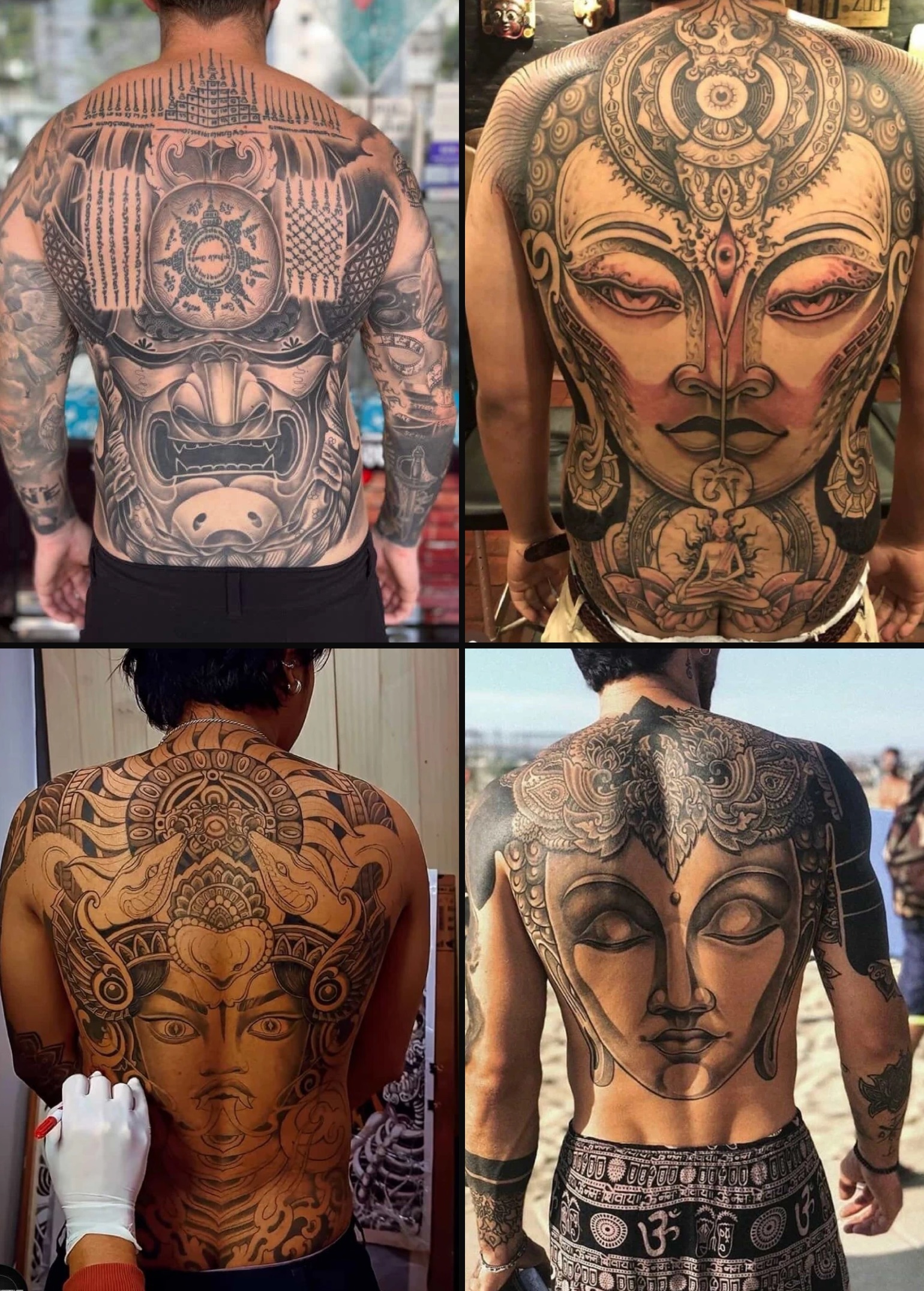
The client came in with the idea of a Buddha tattoo and gave me the freedom to develop the project using my experience. These four references were our starting point.
I wanted the composition to follow the curves of the back, feel monumental and stay clear over the years. I chose large shapes around the Buddha’s face and soft shading to bring everything together in one image.
The project in motion
Stencil and bloodline
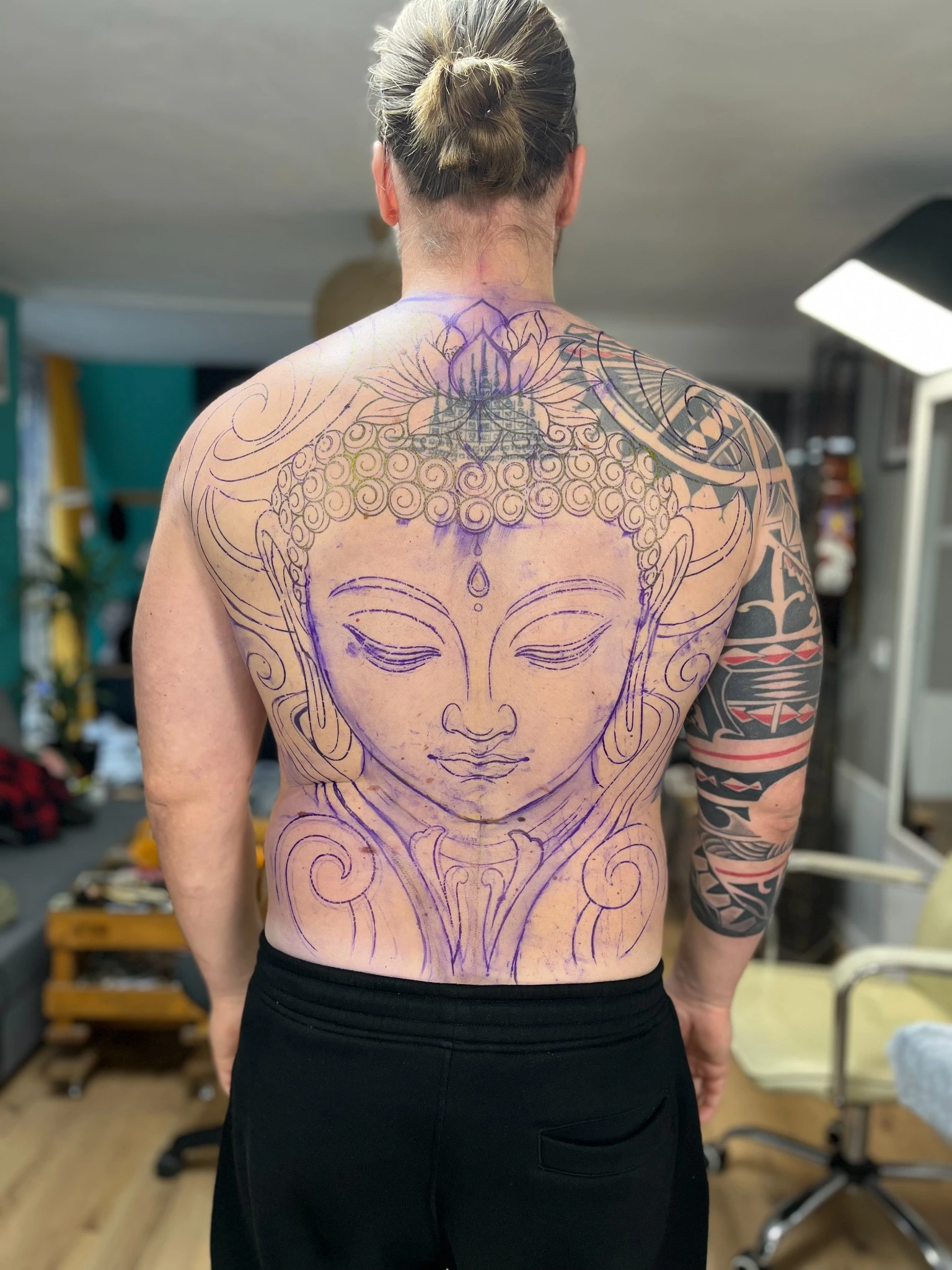
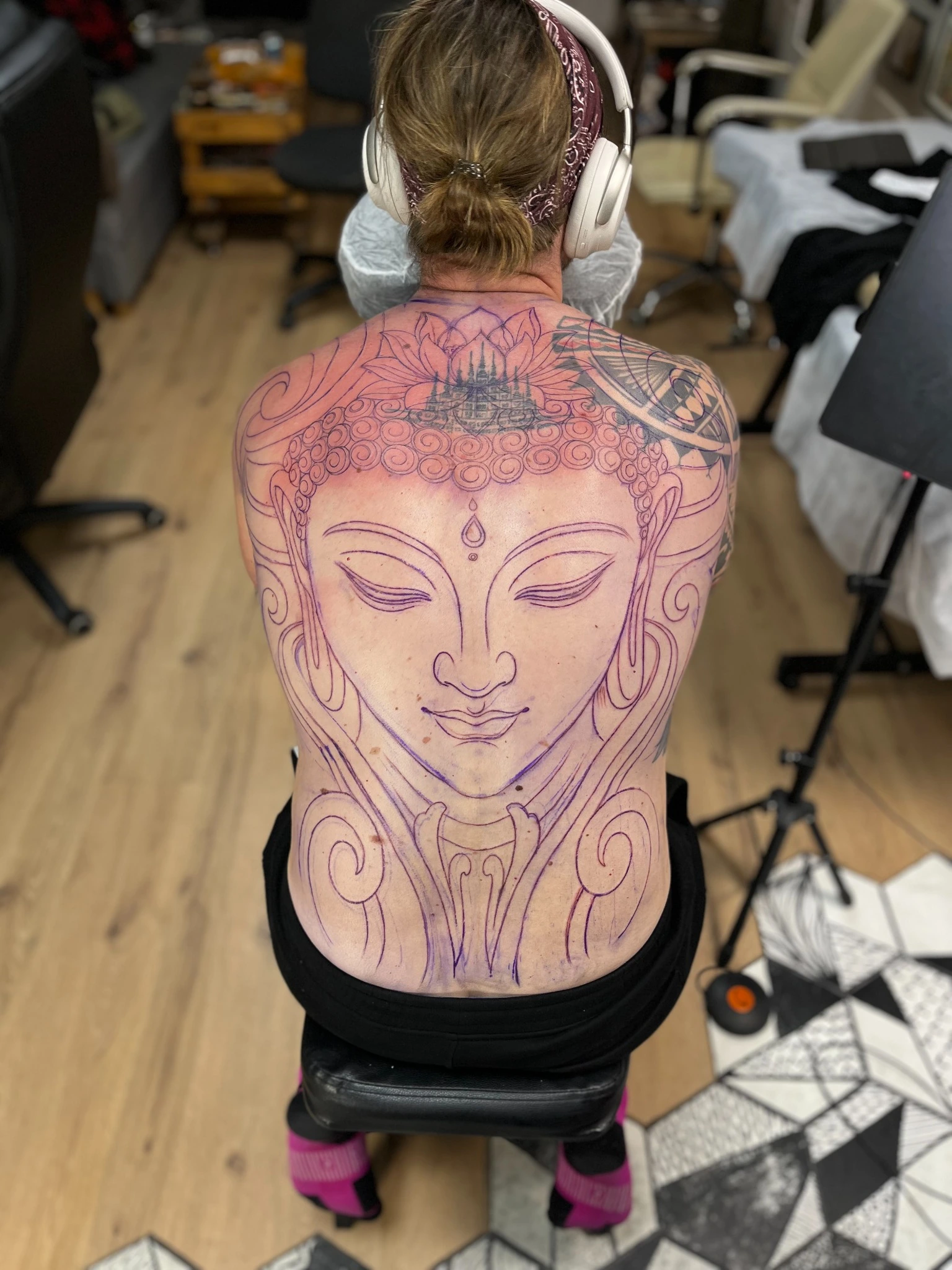
In the first session, I fitted the large stencil to the curves of the back. There was an old tattoo to cover below the neck, and on the right I had to account for the large Māori tattoo on the arm.
Once the stencil was in place, I laid down the main working lines, known as the bloodline. I used those lines as a guide when I built up the shading.
The first shading
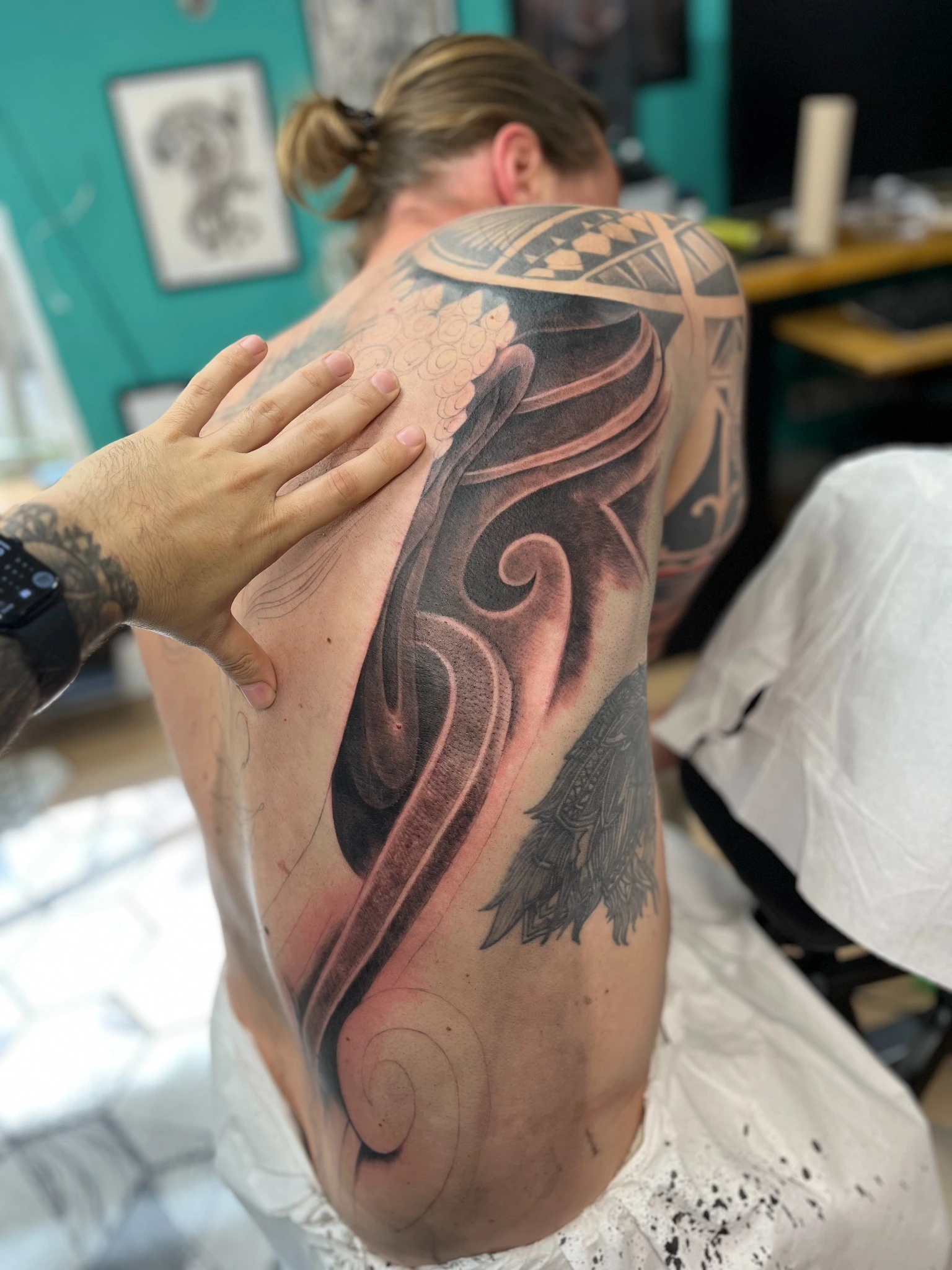
I started shading in the second session. The skin reacted strongly and became very red. That made the work harder, because even the light tones looked darker. Their true tone only became clear once the skin had healed.
Even so, we covered a large area. It looks small against the whole back, but my hand in the photo gives you a sense of scale. The area I worked on is almost the size of a forearm, a substantial part of a sleeve.
The background frames the face
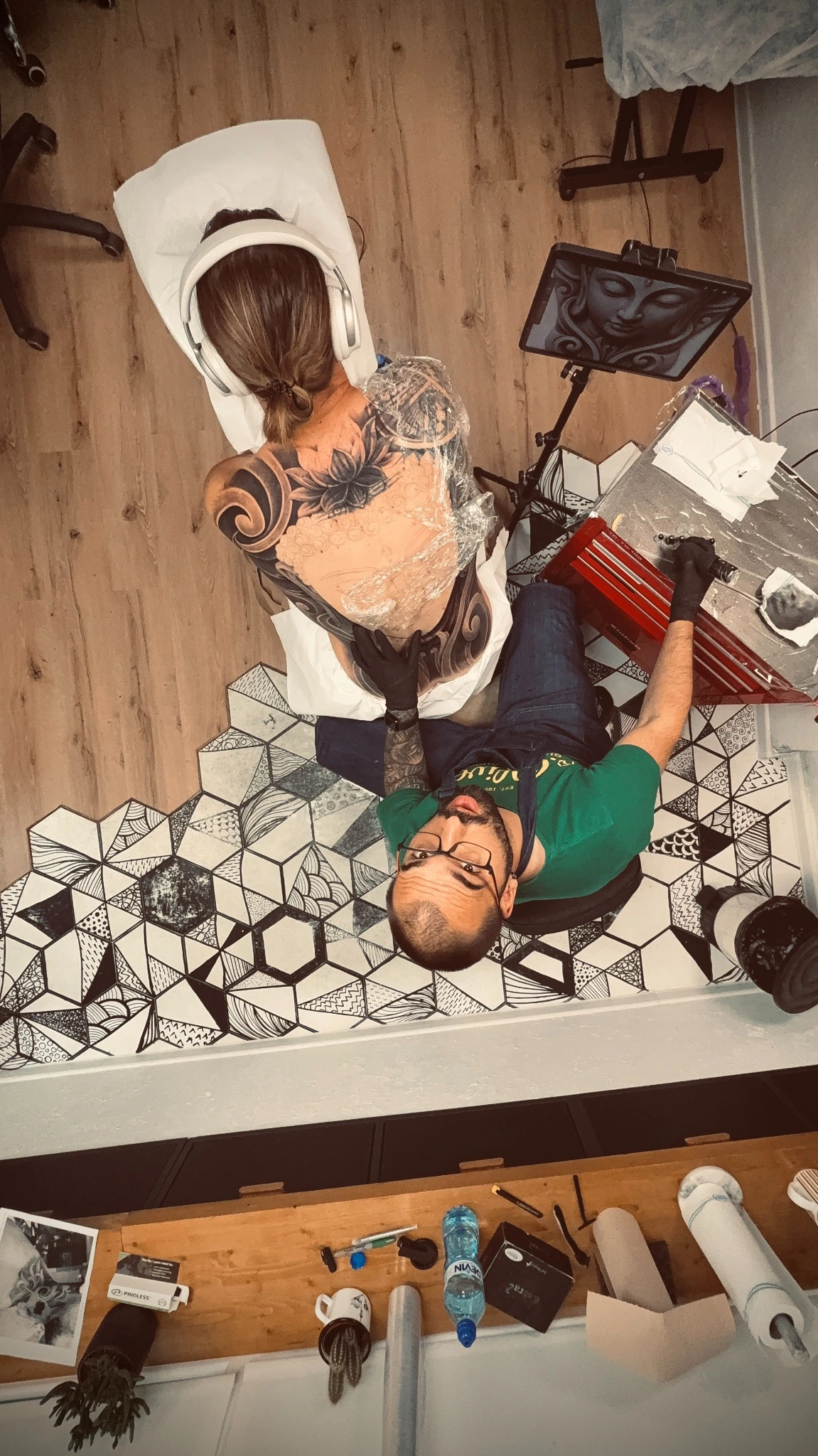
In the third session, I continued shading the background. The overhead photo shows that I still had the face to finish. I left it until last so I could judge how much contrast it needed against the finished background. I wanted it to stay lighter and stand out, using as little black ink as possible.
The finished composition
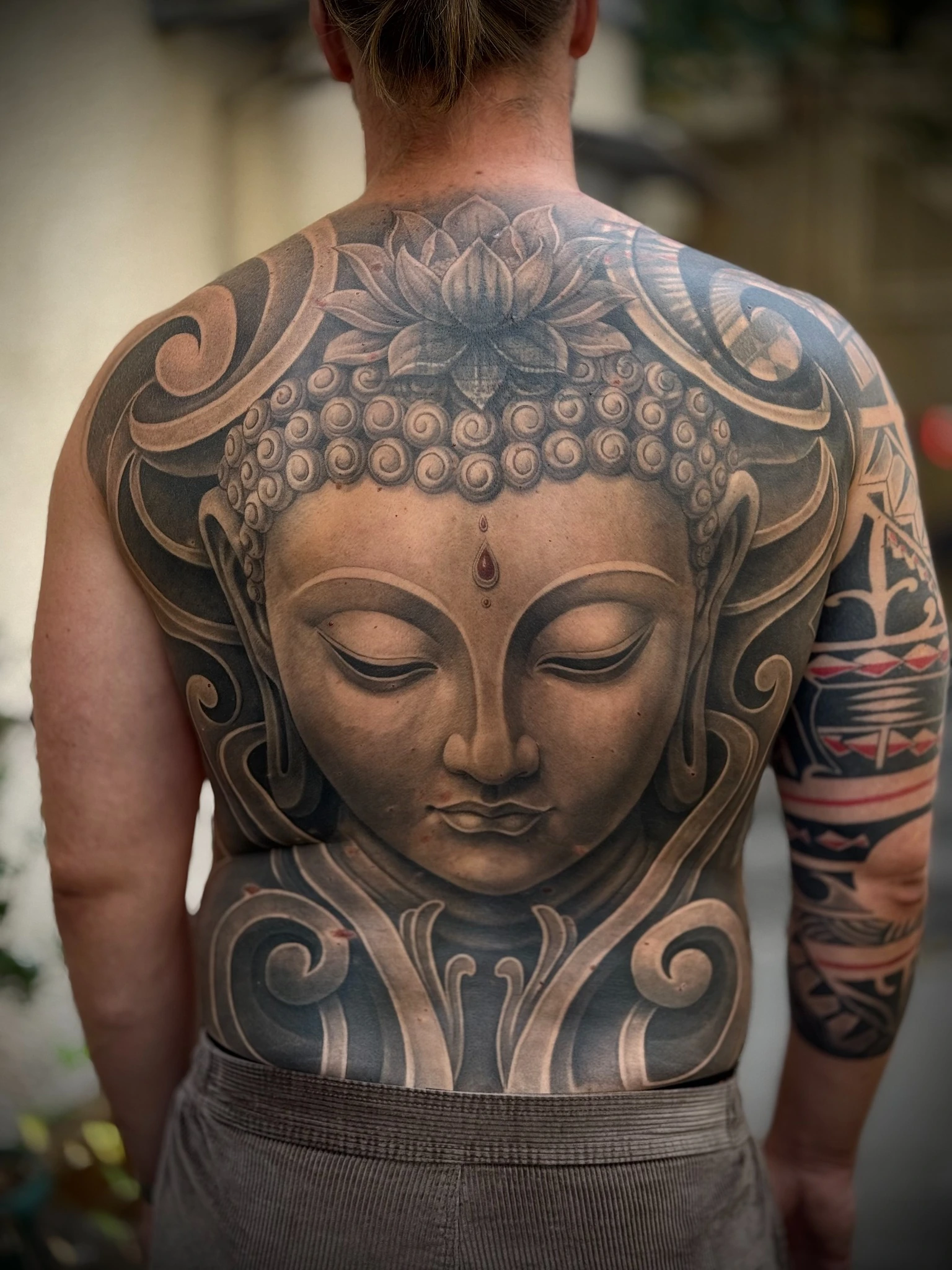
I’m happy with how I covered the old tattoo below the neck. I especially like the way the new composition flows into the large black Māori tattoo on the right.
I photographed the tattoo after it healed, before the final touch-ups. I like to return to the details once I can see how the tones have settled. After those last adjustments the skin reddened again where I worked, and I don’t have a photo of it after that session yet.